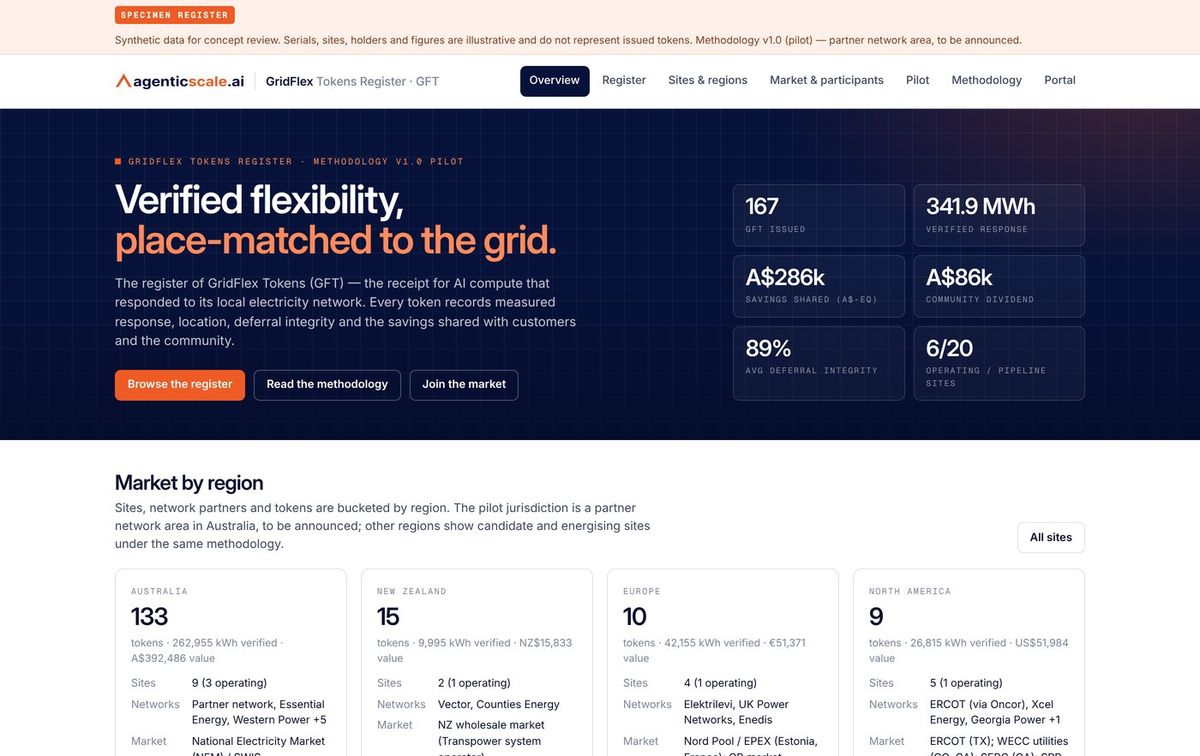
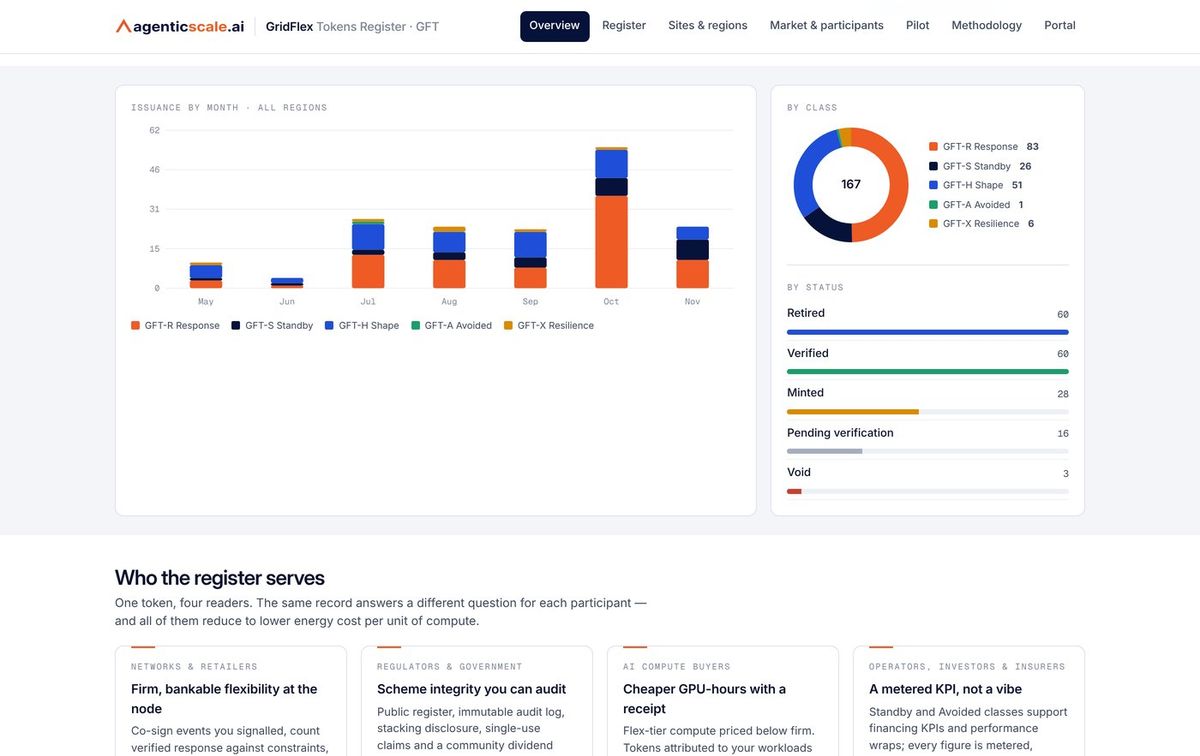
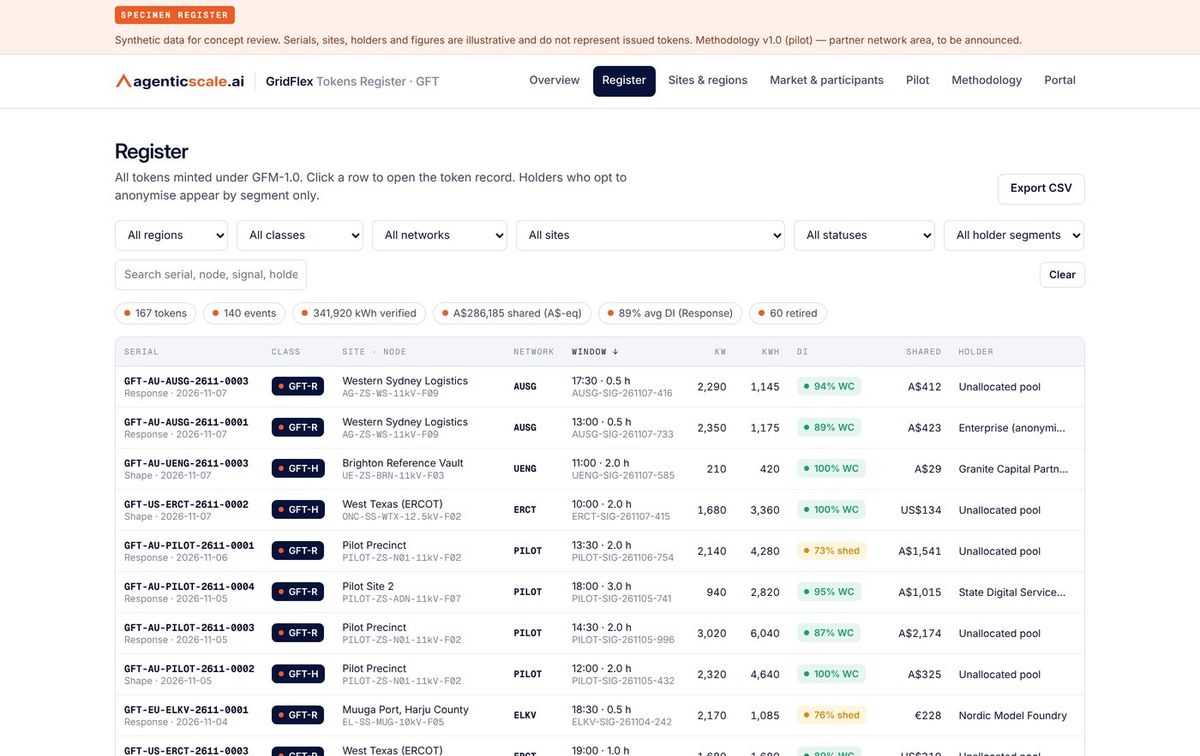
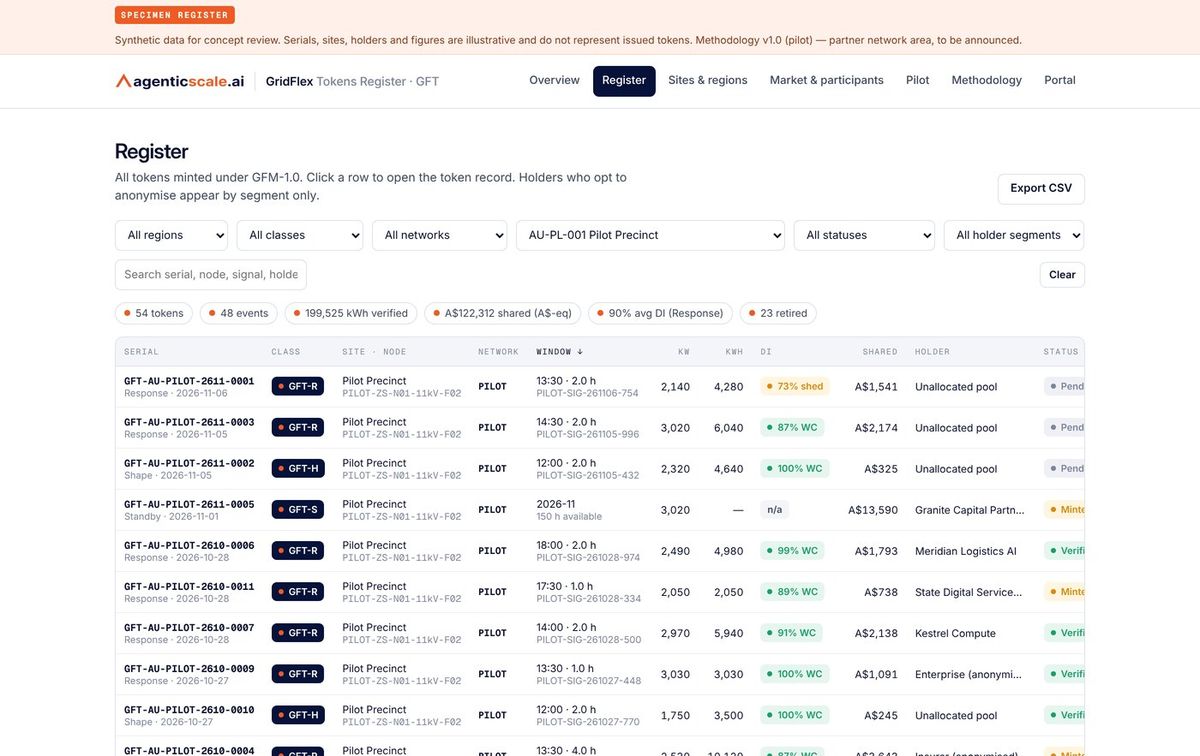
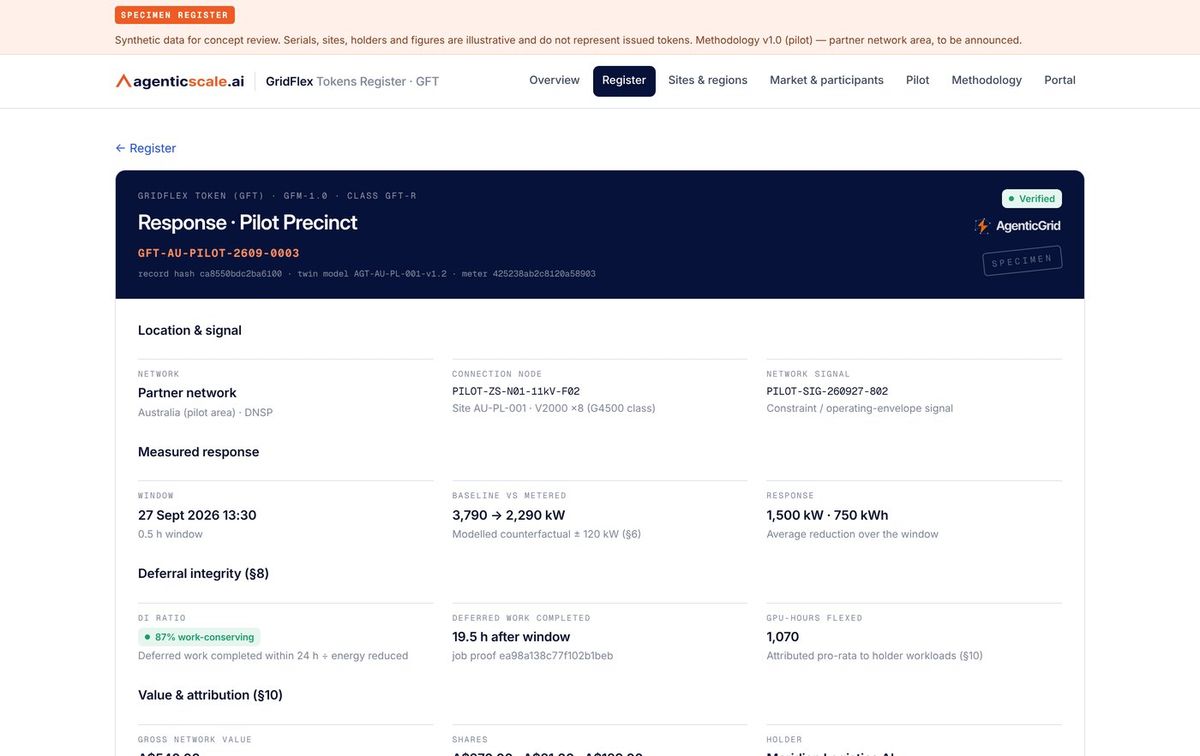
A GridFlex Token is the receipt for AI compute that responded to its local electricity network: measured at the meter, co-signed by the network, retired once.
Every figure on a token reconciles to a meter and to money on a bill. Where carbon markets drifted on baselines, double counting and claims, the methodology fixes each by construction: modelled counterfactuals, a single-use claim with stacking disclosure, and a claims code.
Unique serial · site and connection node · issuer and holder · network signal and window · requested and delivered kW · integrated kWh · baseline and uncertainty · meter provenance · deferral integrity and job proof · verified value and shares · stacking disclosure · three signatures · retirement and claim statement.
Three quantities, kept separate. There is no fixed conversion between AI output tokens and grid MWh: workload, hardware, power management and facility overhead change that relationship. A GFT is also separate from renewable, emissions and Scope 2 claims.
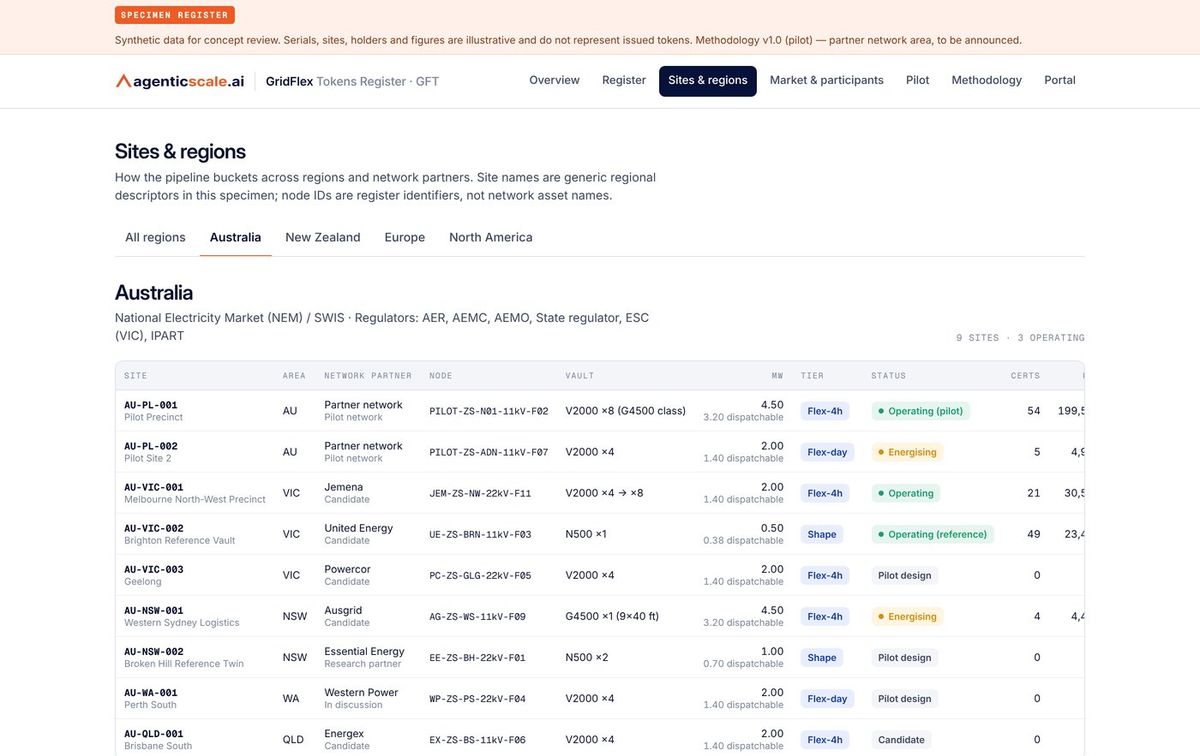
Sovereign AI infrastructure sits at the grid edge: containerised compute connected at a zone substation, running a calibrated model of its own node. The load arriving from the switchyard is what the site models; the response it gives back is what a GridFlex Token records.
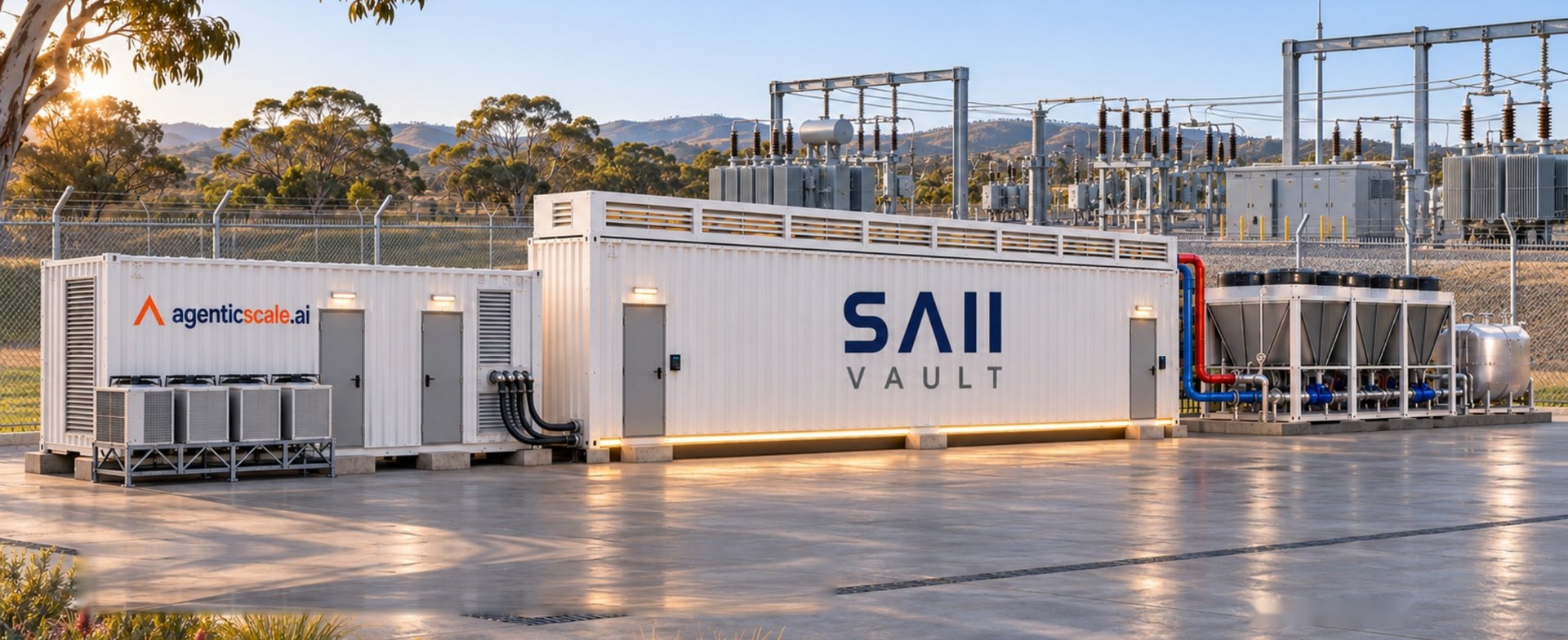
A SAII Vault site runs a calibrated local model of its own load and connection node. When the network signals a constraint or a scheduled window, the scheduler moves deferrable work and the meter records what happened. The registry mints a token; the network co-signs it.
A site-level model of load against its own schedule and the connection node, versioned and referenced on every token. Baselines are modelled, never declared.
Network signals arrive through a flexible connection agreement, dynamic operating envelope or scheduled window. Priority workloads and deadlines are protected by rule.
Response is measured at the connection point against the baseline and its uncertainty band. The network co-signs the signal and window; the token becomes Verified.
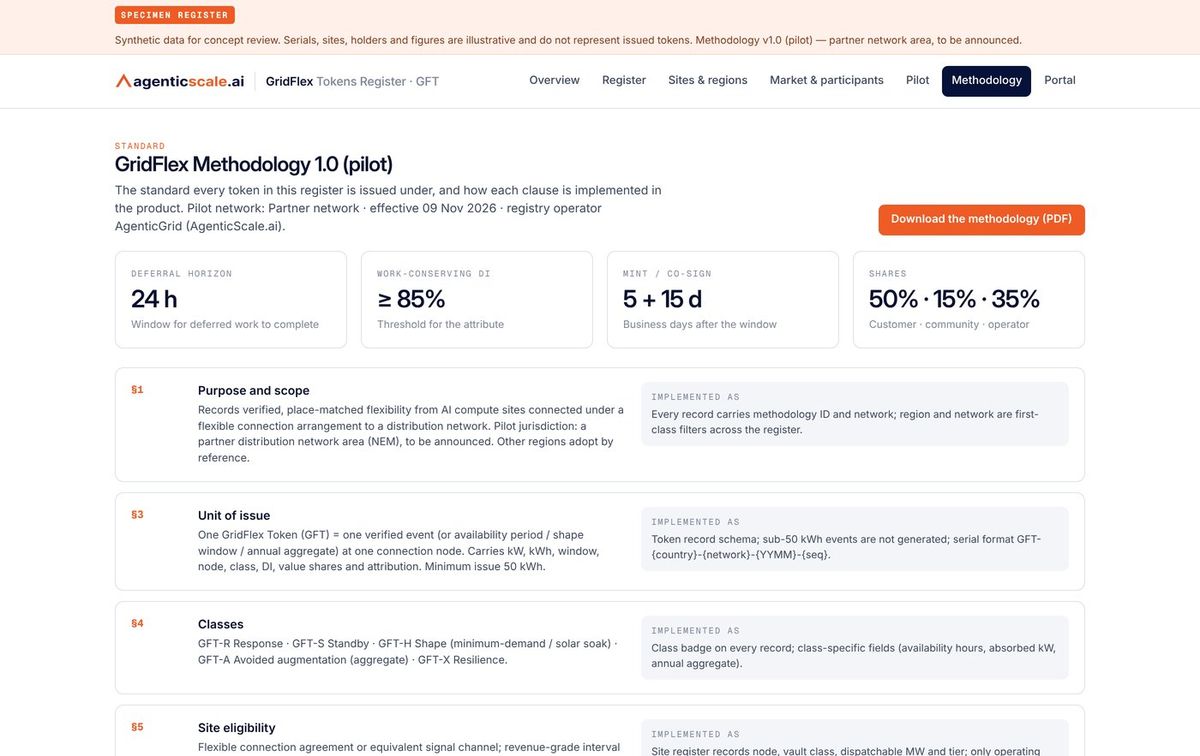
Gross value is split by default 50% to the customer, 15% to a community dividend and 35% to the operator, and settled to invoices with the token as the receipt.
Response and Shape are the workhorses. Shape exists because networks with high rooftop solar now see some of the lowest midday operational demand in the world; a site that reliably absorbs load at 11:00 is doing a service most demand-response instruments cannot describe.
| Class | Name | What the token records | Typical holder | |
|---|---|---|---|---|
| GFT-R | Response | Verified reduction during a network-signalled constraint window. Carries deferral integrity and may carry the work-conserving attribute. | Hyperscalers, enterprises, AI startups (per-workload attribution) | |
| GFT-S | Standby | Standing availability to curtail a declared kW for a declared number of hours per month, whether or not called. Aligns with capacity-style instruments. | Investors, lenders, networks (planning) | |
| GFT-H | Shape | Verified load increase in a scheduled window to absorb local surplus under minimum-demand and rooftop-solar conditions. DI = 1.0 by construction. | Networks, government, buyers with batch workloads | |
| GFT-A | Avoided | An annual aggregate of Response tokens at one node demonstrably deferring a network augmentation, valued against the network's published avoided cost where one exists. | Networks, investors, regulators | |
| GFT-X | Resilience | Hours of backup supplied from site storage to a nominated community load during an outage or planned event. | Insurers, councils, networks |
Compute is the only large load class that can show its flexibility was a shift rather than a shed: a paused job finishes later. Deferral integrity makes that proof part of the token, so a holder can say the work got done and the network can see the rebound.
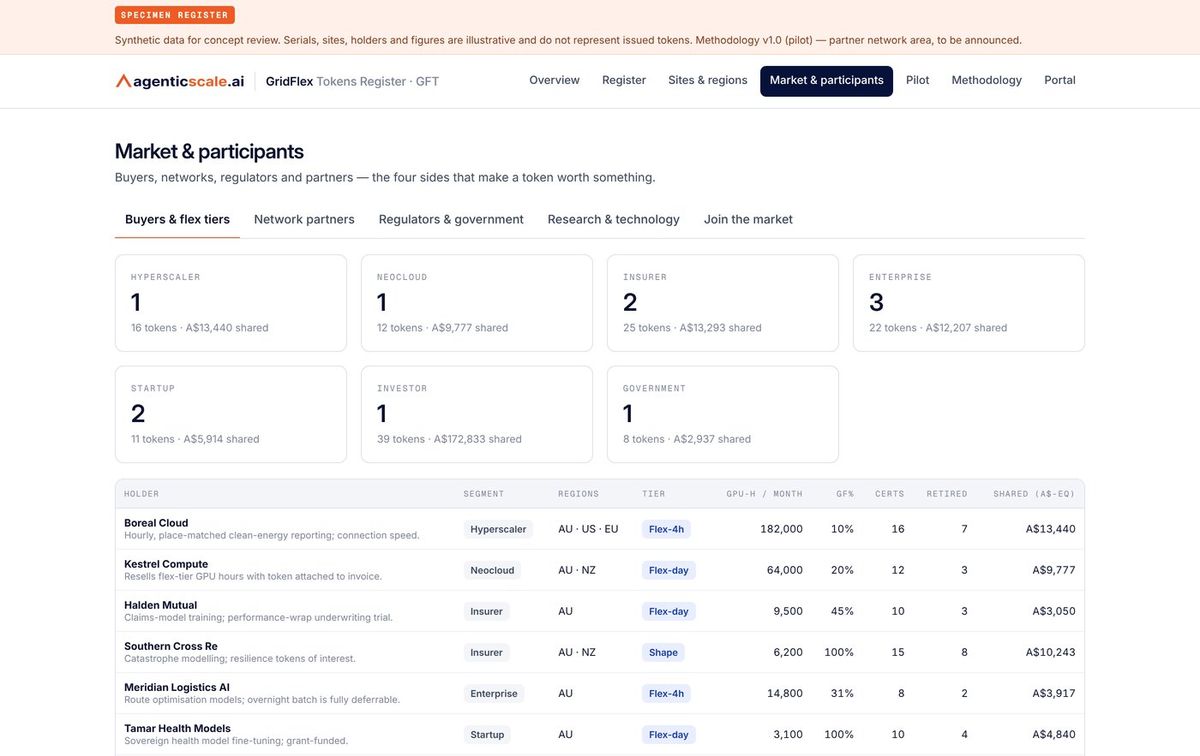
The same token answers a different question for each participant, and all of them reduce to lower energy cost per unit of compute without shifting cost to other customers.
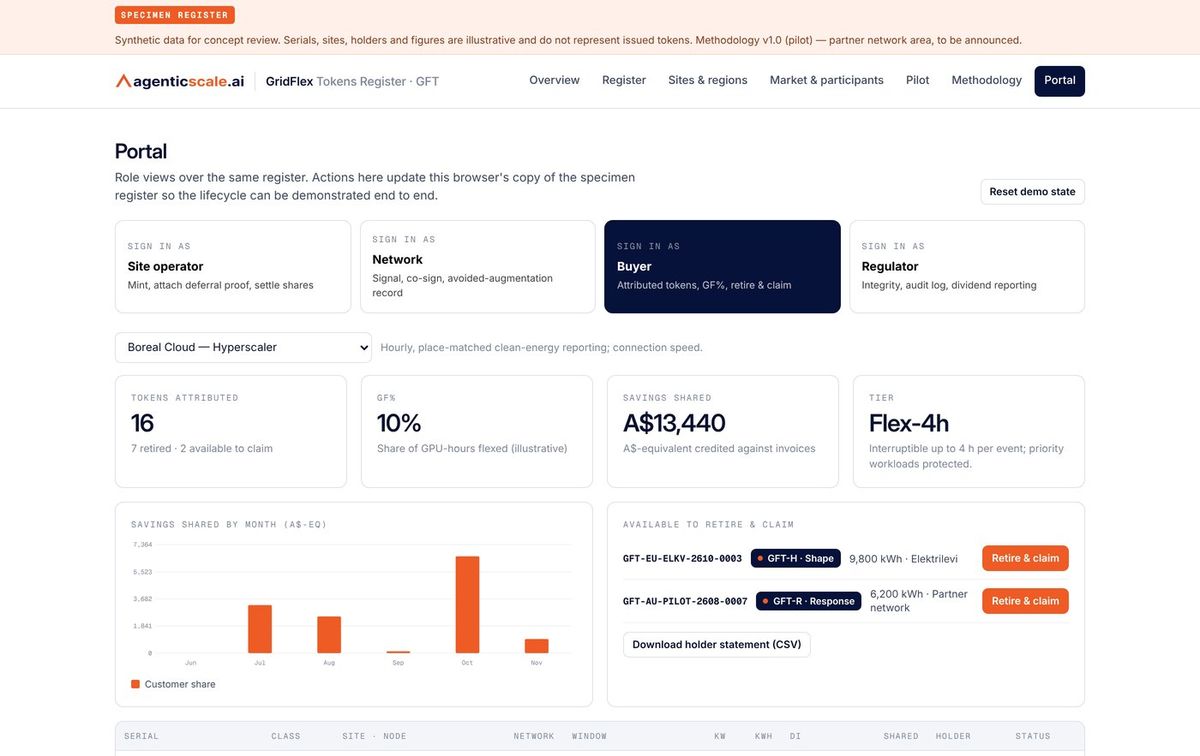
Flex-tier compute priced below firm. Tokens attributed pro-rata to the GPU-hours you flexed ride on the invoice with a GF% and a claim statement you can publish.
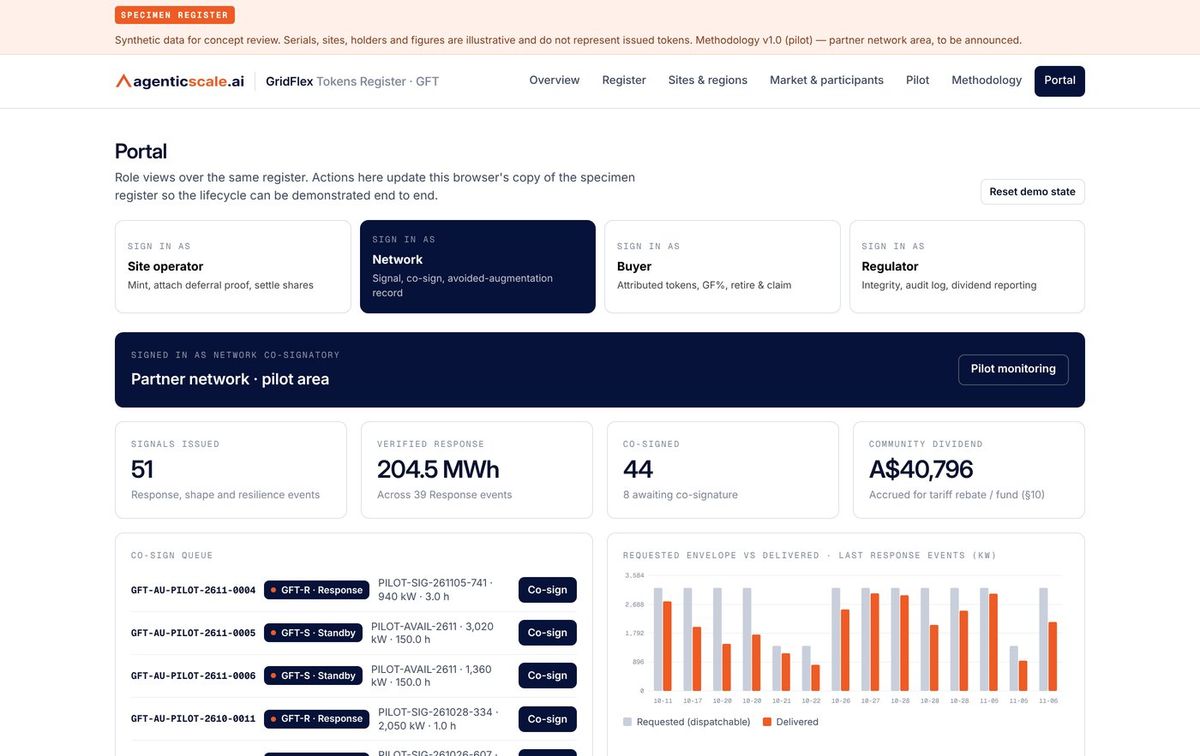
Co-signed events, requested versus delivered kW, and an avoided-augmentation record at a specific connection node, plus a community dividend into a channel you nominate.
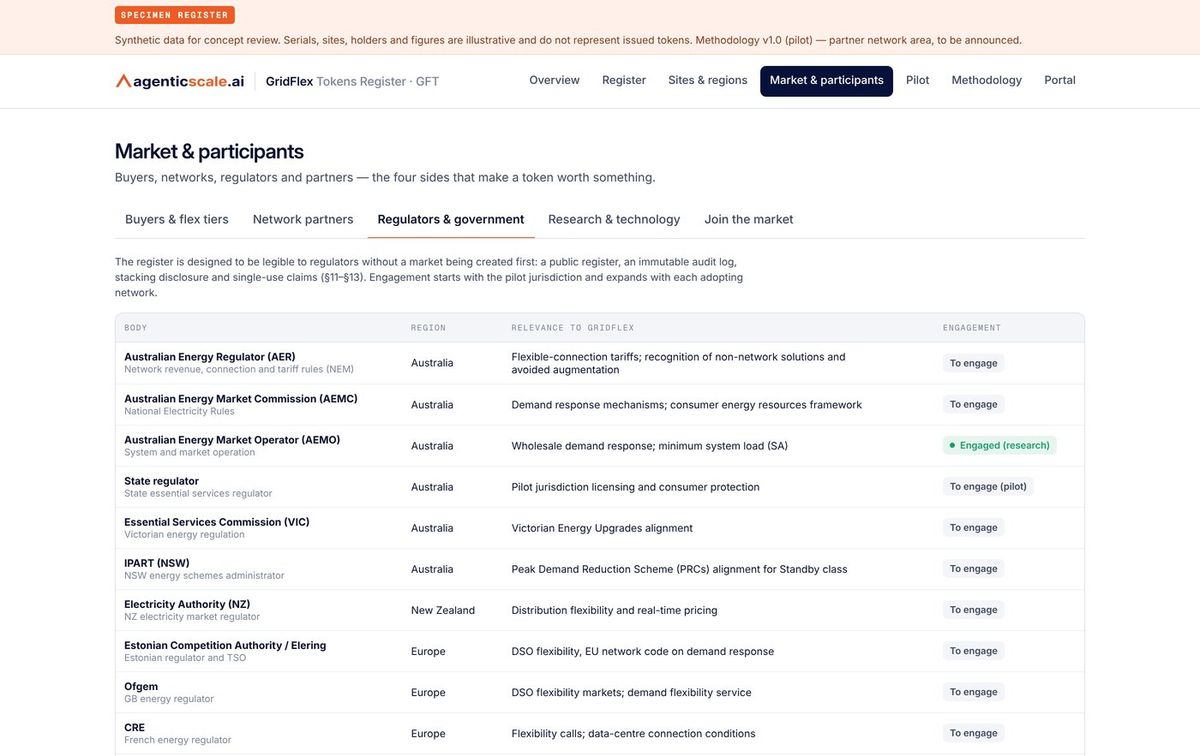
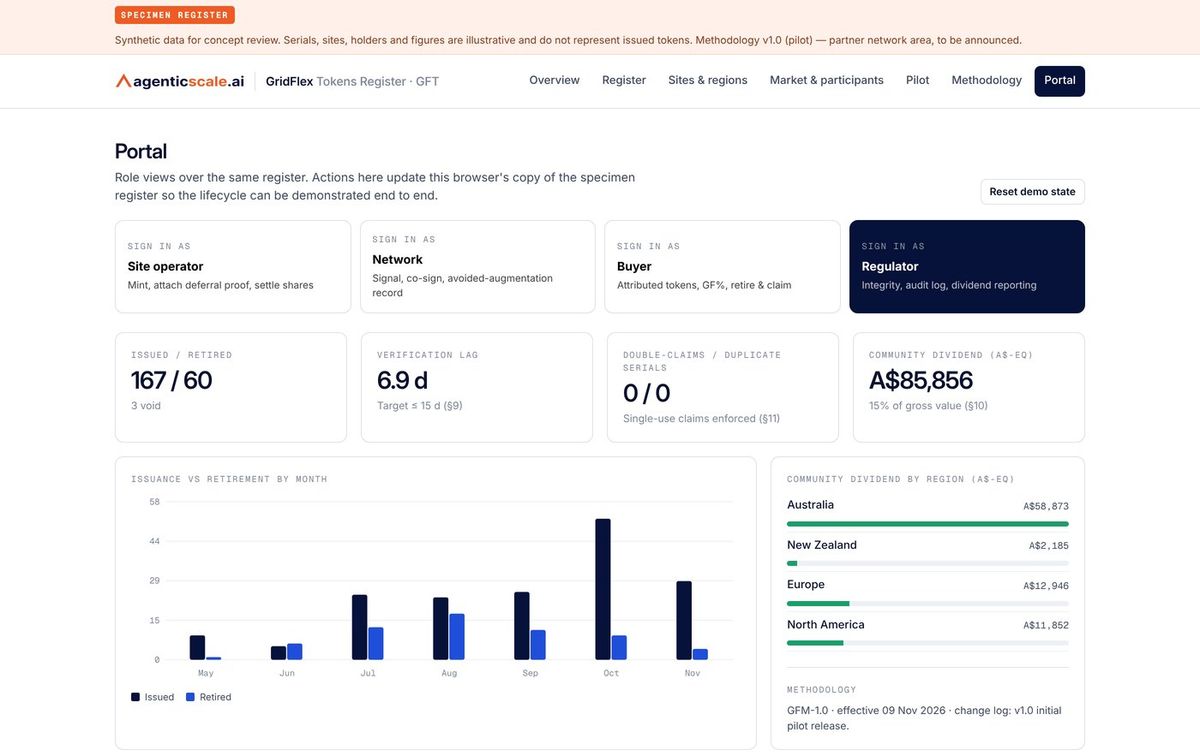
Public register, append-only audit log, stacking disclosure, duplicate and double-claim checks, verification lag against a 15-day target, dividend reported by region.
Standby and Avoided classes support financing covenants; Resilience records backup hours delivered to a nominated community load. Every figure is metered and signed.
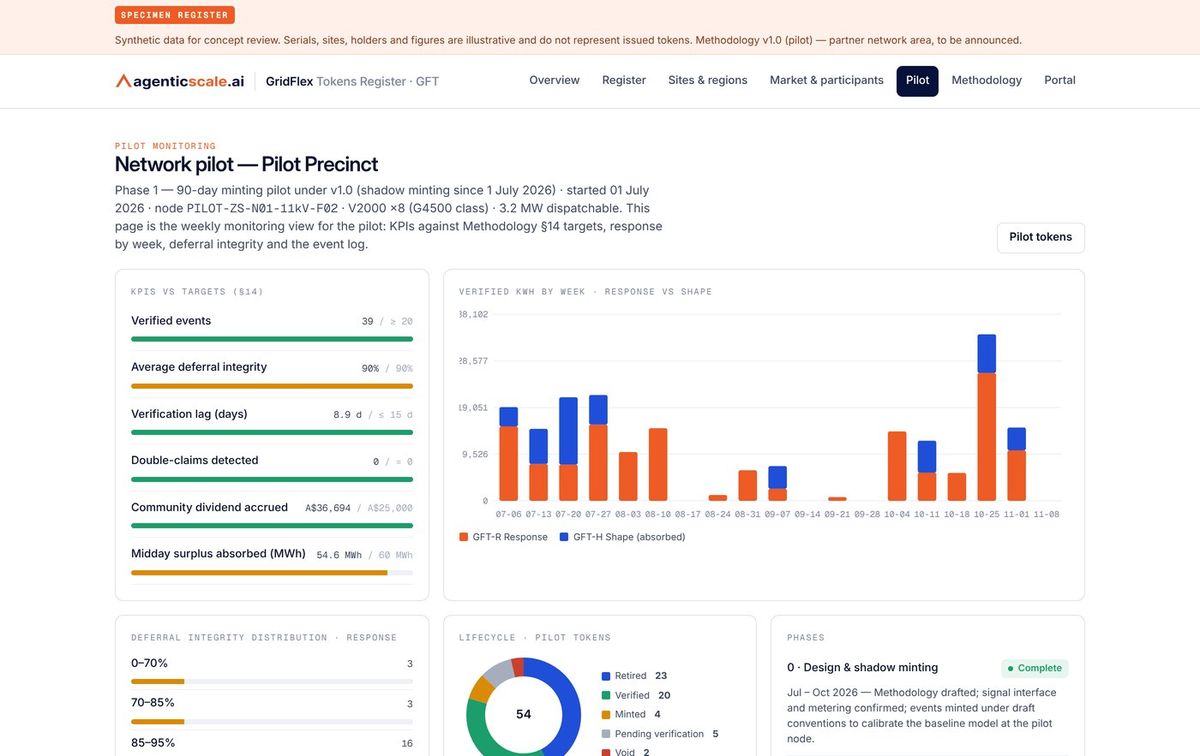
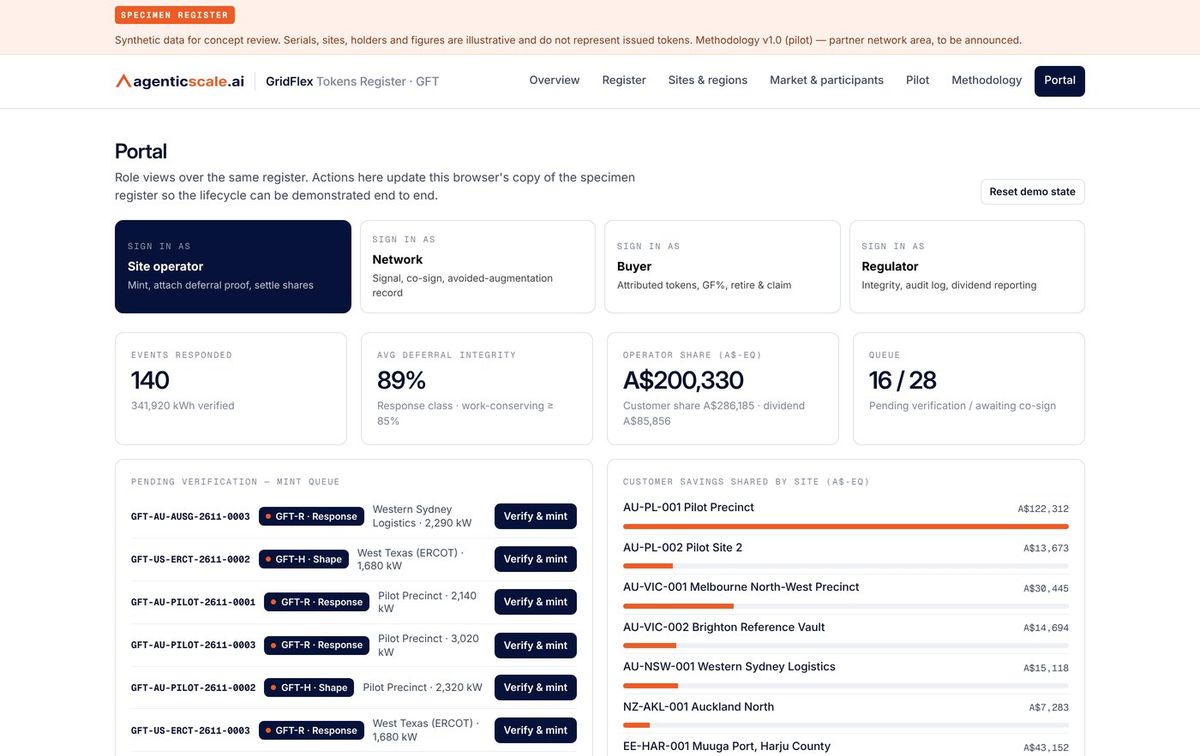
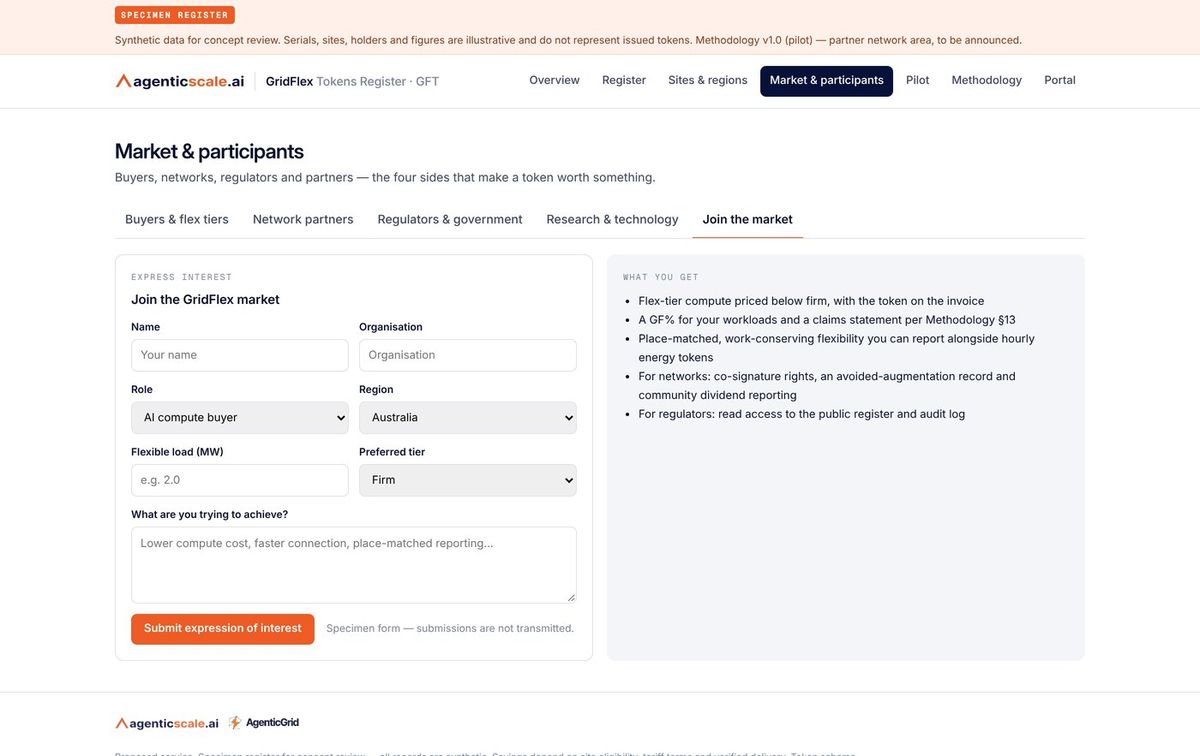
The GridFlex Tokens Register v0.1 is a public register and a portal with four role views, running on a specimen dataset so the whole lifecycle can be walked end to end: signal, mint, co-sign, attribute, retire, claim. Tap any screen to open it full size, or download the product tour (PDF).


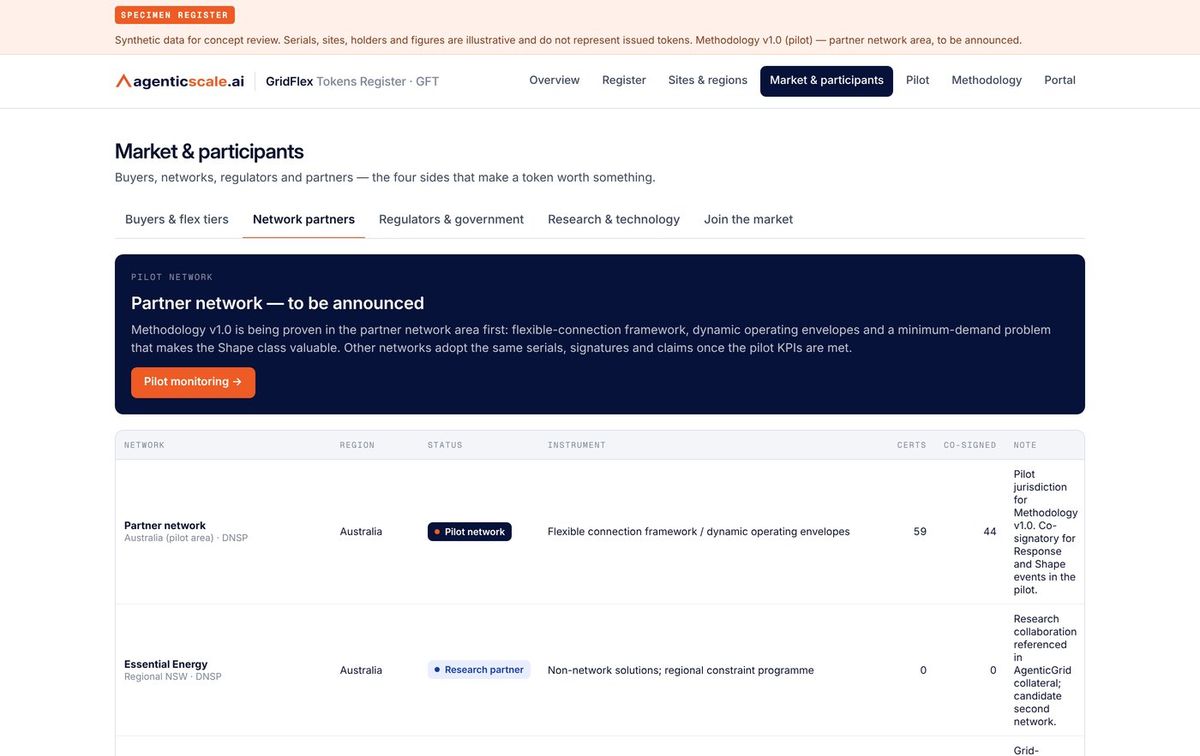
The first jurisdiction will be a network area where a flexible-connection framework already exists, operating envelopes are dynamic, and minimum-demand conditions make Shape valuable from day one; the partner network will be named when the pilot is agreed. The pilot is monitored weekly in the Register's pilot view. No pilot agreement is asserted; this is the plan we are taking to the network.
Targets are from the pilot standard, not results. The methodology, the KPI set and the dividend channel are what we are asking the partner network, its state regulator and the AER to review.
The one-page overview is also available as a high-resolution image.
Buyers who control their schedules, networks with a constraint to manage, regulators who want to see the scheme before a market exists, and investors or insurers who want a metered KPI. Tell us which, and where.